The Murderer of Lee Cape: A Leopard Doesn't Change Its Spots

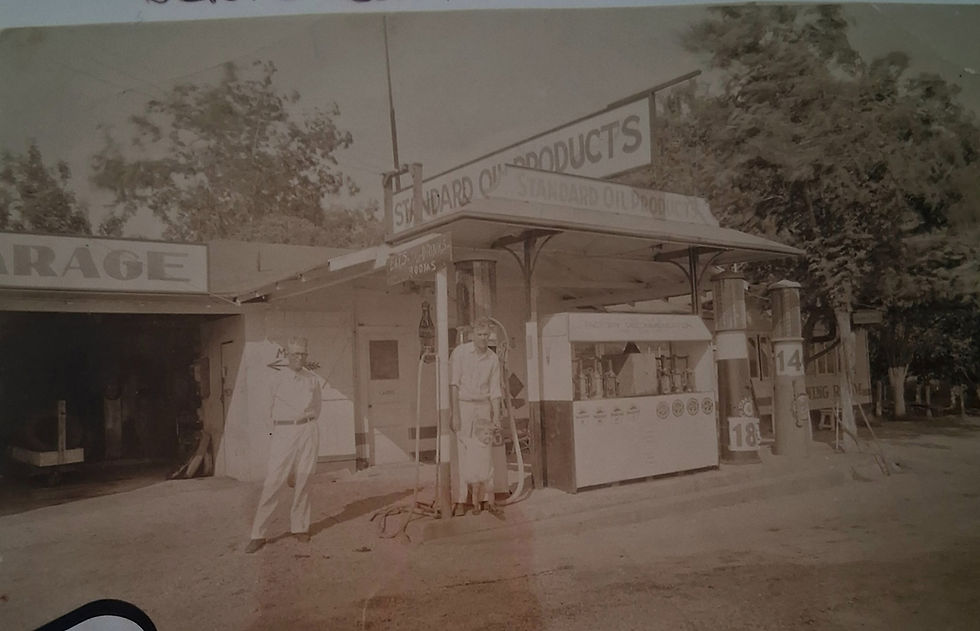
In the summer of 1933, a violent confrontation at a small service station in Devore, California, escalated into a criminal case that drew weeks of newspaper coverage across San Bernardino County. At the center of the controversy were Lewis M. Coleman, a 30-year-old service station operator, and Frank E. Medock of the Glen Helen Ranch.
The incident occurred on June 16, 1933, at Coleman’s filling station in Devore. According to early reports, Medock suffered severe knife wounds to the throat and stomach after an altercation with Coleman. Newspapers initially described the injuries dramatically, though later articles suggested the wounds ultimately were not fatal or permanently disabling.
The Initial Surrender and Charges
The first major newspaper account described Coleman surrendering voluntarily to Sheriff Ernest T. Shay after the stabbing. Coleman openly admitted cutting Medock with a knife but insisted he acted in self-defense.
According to Coleman’s statement to authorities, Medock had threatened to kill him during an argument at the station. Coleman reportedly told investigators he fled afterward because he feared retaliation from Medock and preferred surrendering to authorities over risking another confrontation. Authorities charged Coleman with assault with a deadly weapon with intent to commit murder, a serious felony offense carrying the possibility of lengthy imprisonment. Coleman was arraigned before the San Bernardino justice court and released after posting $500 bail pending further hearings.
Early Proceedings and Delays
As the case moved toward trial, newspapers documented repeated courtroom proceedings and delays. One article noted that Medock was too ill to appear in court and testify, forcing a postponement of the trial.
During these proceedings, Coleman testified in his own defense. His version of events portrayed Medock as the aggressor. Coleman claimed Medock began quarreling with him while gasoline was being pumped into Medock’s vehicle. According to Coleman, Medock cursed him, struck the first blow, and continued the assault throughout the fight.
Coleman further testified that after the stabbing Medock threatened to retrieve a gun and kill him. However, the prosecution presented witnesses who contradicted Coleman’s account. Medock himself, along with Devore rancher Lewis Garboni, reportedly testified that Medock did not strike Coleman until after Coleman had already slashed him deeply from the ear to the shoulder blade with the knife.
The conflicting testimony became the core issue of the case: whether Coleman acted in legitimate self-defense or whether he initiated a near-fatal knife attack.
Maude Coleman’s Testimony
One of the most important defense witnesses was Coleman’s wife, Maude S. Coleman. a.k.a. Modest Coleman. She testified that she heard loud arguing outside the filling station and came out to investigate.
According to her testimony, she heard her husband plead:
“Frank, I don't want to have any trouble with you.”
She stated that Medock responded aggressively, allegedly saying:
“I’m going to knock the devil out of you.”
Mrs. Coleman testified that Medock grabbed her husband by the throat with one hand while striking him with the other. She claimed Coleman then retaliated physically, pulling down Medock’s hat and striking him twice. Notably, however, she also testified that she never actually saw a knife in her husband’s hand during the altercation. That detail likely weakened the defense’s attempt to fully justify the stabbing as self-defense. The trial also featured numerous “character witnesses” presented on Coleman’s behalf, indicating the defense attempted to portray him as a respectable local businessman rather than a violent criminal.
Jury Verdict
After hearing testimony from both sides, the jury reached a compromise verdict. Newspaper coverage reported that Coleman was found guilty of assault with a deadly weapon and attempt to commit murder. Still, the jury simultaneously recommended clemency, suggesting they believed there were mitigating circumstances surrounding the confrontation. This recommendation strongly implied that jurors accepted at least part of Coleman’s self-defense argument, even while concluding he had used excessive or unlawful force.
Sentencing and Leniency

At sentencing, Judge B. F. Warmer followed the jury’s recommendation for mercy.
Although Coleman originally faced a felony charge punishable by one to fourteen years in state prison, the judge reduced the offense to a misdemeanor. Coleman ultimately received a six-month county jail sentence, with credit granted for time already served after his surrender.
A Few Years Before
In 1927, Lee Cape was struck down while pursuing moonshiners. He followed a group of them to the house of C.L. Smith and got into an argument. Lindsay William Evans shot, 65-year-old Lee in the side, and loaded him up in the car and drove his lifeless body to Fairmount. There Lindsey decapitated Lee and discarded his head some 300 yards away from the body.

Six people were wanted in connection with the murder. Lindsey Evans, Walter Gradon “Grady” Evans, Hoyt Evans, Mrs. Evans, Carter Wilson, and C.L. Smith. There were several trials in Pickens County.
Hoyt got sentenced to life in prison. Walter Evans was found not to have been involved. The other two men were sentenced to being an accessory to murder and served a year on the chain gang. Hoyt escaped from prison and made his way to Arkansas before being caught and sent back. He was pardoned in 1941. C.L. Smith broke free in January of 1934 and was never apprehended again.

On The Lam
Lindsey W. Evans was never apprehended and disappeared from census data and all other government records after 1920. In years before Cape’s murder, Lindsey had children with Alice Chambers.
A son, Hicks Milton Evans was born June 5, 1925. Searching through his records, a Social Security Claim recorded Lindsey William Evans as his father. Alice and her children remained in Fairmount after the departure of her husband, and by the 1940 census, her marital status was listed as being widowed.
Old stories in Pickens County, Georgia, tell of how Lindsey laid low in the western part of Pickens County long enough to find his way to a train station. Lindsey took a train to the west and settled in San Bernardino County, California.
A family story recounts Lindsey writing a letter to his "widowed" wife from an address in California. Subsequently, one of the Evans family members in Georgia made an annotation of a relationship between the deceased Hicks and his deceased father, Lewis Milton Coleman.
A New Identity
Lindsey Evans's own father was named Milton Lewis Evans. In donning a new identity, Lindsey merely reversed the order of his father's middle and first name while adopting the surname Coleman. It is important to remember that Lindsey escaped west and was more easily able to change his identity because the Social Security System wasn't in place. Lewis Milton Coleman was granted a Social Security number while working in California.

Incidentally, Coleman's death certificate listed the same birthday as Evans, albeit with a slightly different birth year. Lindsey married a woman named Modest shortly after arriving in Devore, California.
A Message on a Website
I had written at length about Lindsey being Lewis on my history blog at www.northgeorgiahistory.com in 2023. In the spring of 2026, I received a message from a woman living in San Bernardino, California. She stated she was the granddaughter of Coleman and wanted to talk. I was slightly apprehensive at first, and concerned the woman would be angry at what may have been perceived as defamatory towards her grandfather.
The Call
We spoke at length about Lindsey's true identity prior to his relocation to California. And even though the are the same person, she had as many questions about Lindsey Evans as I did about Lewis Coleman. Over time, the pieces all came together. Her grandfather built a house in California.
The gas station incident in Devore and trial was known to her. People, even relatives of her grandfather, were afraid of him. When we tried to figure out why her grandmother lied to the court and the police, it all became clear. Her grandmother was terrified of Lewis. She knew his temper and had seen first hand the carnage he had done with a knife. But what was the real reason Lewis stabbed Frank? Frank had made romantic advances on her grandmother and Lindsey was deeply jealous. What the court and newspapers blamed on self-defense was actually jealousy-based retaliation.
It All Made Sense (Finally)
Lewis was loving and kind to his granddaughter. She thinks fondly of him. He was a hard worker, a provider and very handy. However, in light of her discovery of his role in the murder and dismemberment of Cape, and the abandonment of his original family, she was conflicted.
She recalled an early childhood memory with her grandfather, which struck her as quirky at the time, and in retrospect made total sense. Lewis Coleman gave his granddaughter the following advice:
"if you ever do anything wrong, don't tell a soul, and run."
The irony being, of course, is Lindsey must have told someone that he living under a psedonym in California while he was still alive. Otherwise, there would have been no way to identify him as Lewis. He couldn't keep his own advice.


Comments